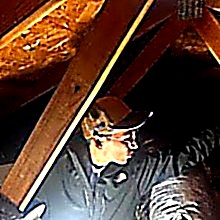
Bats in Your Attic or Walls?
Georgetown, TX is in the heart of Mexican free-tailed bat country — Central Texas has the largest bat colonies in the world. While bats are incredibly beneficial for the ecosystem (one bat eats 1,000+ mosquitoes per night), a bat colony inside your home is a serious health and structural concern.
Critter Wrangler provides professional, legal bat exclusion in Georgetown and Williamson County. We don't trap or kill bats — we use exclusion devices that allow them to leave but not return.
Why Bat Removal is Time-Sensitive
If you call us during the restricted season, we'll inspect, document the colony, and schedule your exclusion for the next available window.
Health Risks
- Histoplasmosis — a fungal lung disease that grows in accumulated bat guano
- Rabies — bats are a primary rabies vector in Texas; any direct contact requires medical evaluation
- Bat bugs — similar to bed bugs, bat parasites can migrate into living spaces
How We Remove Bats
- Colony Assessment We inspect your roofline, attic, and exterior at dusk to observe bat exit flights. We estimate colony size and identify all exit points — bats can exit through gaps as small as ⅜ inch.
- Exclusion Device Installation We install one-way exclusion tubes or netting over every exit point except one primary exit. Bats fly out normally but cannot re-enter through the exclusion devices.
- Final Sealing After 4–7 days with no bats observed inside, we remove exclusion devices and permanently seal all exit points with caulk, hardware cloth, and metal flashing.
- Guano Cleanup (Recommended) Bat guano accumulates quickly and is a significant health hazard. We offer attic decontamination, guano removal, and insulation replacement.
Signs You Have Bats
- Squeaking or chittering sounds from attic or walls (especially at dusk)
- Bats seen exiting your roofline at dusk — even 2–3 bats can indicate a larger colony inside
- Dark staining around small gaps in your roofline or chimney (guano and grease marks)
- Strong ammonia smell from attic
- Bat droppings near your foundation or on window sills
Mexican Free-Tailed Bats in Central Texas
The Mexican free-tailed bat is the species you'll find in Georgetown homes. Colony sizes typically range from 20 to several hundred. They return to the same roost site year after year and are protected from killing under the Texas Parks & Wildlife Code. Exclusion is the only legal and effective removal method.
Why Georgetown Has High Bat Activity
Georgetown sits in one of the densest bat habitats in North America. Several local factors drive consistent bat pressure on area homes:
- Inner Space Cavern — Georgetown's cave system along I-35 supports significant cave bat populations that range throughout the city, actively scouting homes for roost sites
- Austin Congress Avenue Bridge corridor — Georgetown is directly in the flight corridor of Austin's 1.5-million-bat colony, meaning local attics are constantly evaluated as secondary roost locations
- San Gabriel River insect corridor — the river's insect production concentrates bats along the waterway and into adjacent neighborhoods at dusk
- Sun City Georgetown — the community's aging soffits and fascia develop gaps over time that bats exploit; Sun City is one of our most frequent bat call areas
- Historic downtown area — Georgetown Square's older commercial and residential buildings have more construction gaps and are commonly used as bat roost sites
For detailed information on the Texas legal exclusion season, see our Texas bat exclusion guide.