The Most Important Thing About Bats in Texas
Bats in Texas are legally protected. You cannot kill them, poison them, or trap them. The only legal method for removing bats from your home is exclusion — and it can only be performed during specific times of year.
Miss the legal window, and you're looking at waiting months before work can begin. This guide explains the Texas bat exclusion season, what the exclusion process actually involves, and why Central Texas homeowners need to act before the deadline.
Why Bats Are Protected in Texas
Texas is home to 32 bat species — more than any other U.S. state. The Mexican free-tailed bat (Tadarida brasiliensis) is Texas's official state flying mammal, and Austin's Congress Avenue Bridge hosts the largest urban bat colony in North America — an estimated 1.5 million bats that consume 10–30 tons of insects nightly.
Bats are critical to Texas agriculture and ecosystems. A single bat consumes up to 1,000 mosquitoes and insects per hour. The economic value of pest suppression by Texas bats is estimated at over $1 billion annually. They are specifically protected under the Texas Parks & Wildlife Code.
What Is Bat Exclusion?
Exclusion is not trapping and not killing. It is the process of installing one-way devices over bat entry points — netting, tubes, or cones that allow bats to fly out at dusk but prevent them from re-entering. After all bats have departed (typically 3–7 nights), the devices are removed and every entry point is permanently sealed.
Done correctly, exclusion is 100% humane and permanent. Done incorrectly — missing a single entry point — and bats find an alternate route in or worse, get trapped and die inside your walls.
How Critter Wrangler Performs Bat Exclusion
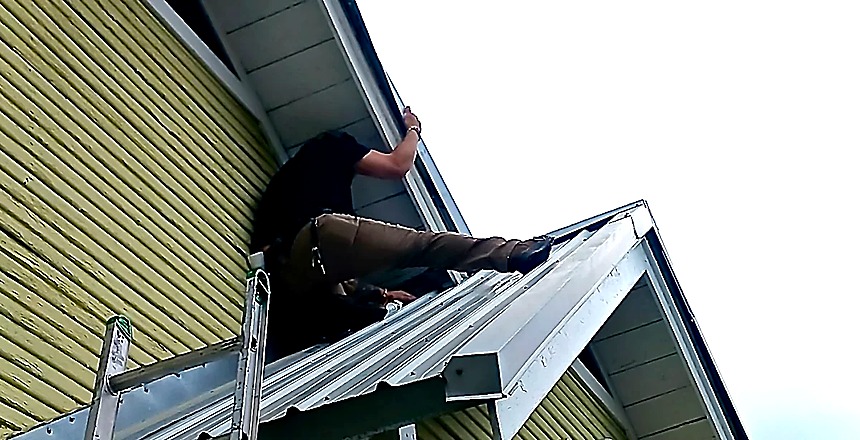
- Full Exterior Inspection We inspect your entire roofline, ridge caps, soffits, fascia, gable vents, and chimney. Bats can enter through gaps as small as 3/8 inch — we find every one before placing any devices.
- One-Way Exclusion Devices We install exclusion netting or tubes over active entry points. Bats fly out at dusk and cannot re-enter. We check activity for 3–7 nights to confirm all bats have exited.
- Permanent Sealing Once activity stops, we remove devices and seal every gap with commercial caulk, hardware cloth, and metal flashing. We prioritize durable materials that won't fail in Texas heat.
- Guano Cleanup (Optional) Accumulated bat guano (droppings) in your attic can harbor Histoplasma capsulatum, a fungal pathogen. We offer attic cleanup, guano removal, and insulation replacement as an add-on service.
Bats in Central Texas & Georgetown
Central Texas is prime bat habitat. Georgetown and Williamson County are home to large Mexican free-tailed bat colonies that roost in attics, under bridges, in old barns, and in cave formations. Several factors make Georgetown particularly bat-active:
- Inner Space Cavern — Georgetown's famous cave system along I-35 supports significant cave bat populations that range throughout the city and surrounding hillsides
- San Gabriel River corridor — riparian insects provide abundant food sources, concentrating bats along creek corridors throughout Georgetown
- Older housing stock — Georgetown's historic neighborhoods near the Square have older construction with more gaps and entry points than newer homes
- Sun City Georgetown — the large 55+ community sees regular bat calls as the area's aging soffits and fascia develop gaps over time
- Proximity to Austin bat colonies — Georgetown sits in the direct flight corridor of Austin's large bat colonies, meaning local attics are constantly being scouted for new roost sites
Why the Exclusion Window Matters: Plan Ahead
The exclusion season opens August 16 and runs through March 31. If you miss this window — or if a company performs exclusion during the maternity season (April 1–August 15) — flightless pups can be trapped inside and die, creating a dead animal problem on top of your bat problem.
Signs You Have Bats in Your Attic
- Seeing bats emerge from your roofline at dusk
- Dark brown staining at entry points (bat grease from their fur)
- Scratching or chittering sounds in attic, especially at dusk and dawn
- Strong ammonia odor from attic (bat guano accumulation)
- Small dark pellets (guano) found in attic — smooth and segmented, unlike rodent droppings
- Bats found inside the living area (they fell through a gap in the attic floor)
For full details on bat removal, see our dedicated bat removal Georgetown TX service page.